- info@SeqMatic.com
 Mon - Fri 9AM - 7PM PST
Mon - Fri 9AM - 7PM PSTSingle cell RNA sequencing (scRNA seq) measures gene expression in individual cells rather than averaging signal across thousands of cells in a bulk sample. Where bulk RNA seq produces a single expression profile for an entire tissue, scRNA seq resolves the transcriptome of each cell independently, revealing cell type composition, rare populations, and expression states that bulk methods cannot detect.
This resolution matters when cellular heterogeneity drives the biology. Tumors contain distinct subclones with different drug sensitivity profiles. Immune tissues contain dozens of functionally distinct cell states that shift during disease progression. Developing organs contain transient progenitor populations that disappear within narrow time windows. scRNA seq captures these differences because each cell generates its own library and its own expression profile.
Three commercial platforms are available for single cell RNA sequencing at SeqMatic: 10x Genomics Chromium, Parse Biosciences Evercode, and Scale Bio. SeqMatic is a Certified Service Provider (CSP) for both 10x Genomics and Parse Biosciences, and now offers Scale Bio kits following the 10x Genomics acquisition of Scale Biosciences. The right platform depends on your sample type, throughput requirements, and experimental design, and our team helps you make that decision before work begins.
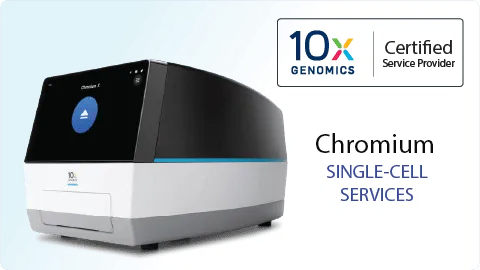
The 10x Genomics Chromium system uses droplet-based microfluidics to partition individual cells into gel bead in emulsion (GEM) droplets, where each cell is lysed and its mRNA is tagged with a unique barcode. SeqMatic operates the Chromium X and supports the full range of 10x Genomics single cell library types:
10x Genomics Chromium is the strongest option when you are working with fresh or cryopreserved single cell suspensions and need multi-omic readouts, paired immune receptor sequencing, or established downstream pipelines like Cell Ranger and Loupe Browser.
Parse Biosciences Evercode uses combinatorial barcoding to label cells in a series of split and pool steps. Because barcoding happens inside fixed, permeabilized cells, no specialized microfluidics instrument is required. Cells are processed in standard plates, and the combinatorial indexing scheme generates millions of unique barcodes.
SeqMatic supports the full Parse Biosciences Evercode product line:
Parse Biosciences Evercode is the strongest option when you need instrument-free processing, are working with fixed or frozen samples, need to profile more than 100,000 cells, or are designing studies on non-model organisms where full length transcript coverage improves gene quantification against incomplete reference annotations. The fixation step also enables batching across time points and sites without introducing technical batch effects.
Scale Bio (acquired by 10x Genomics in August 2025) brings a combinatorial indexing approach to the 10x ecosystem. Scale Bio kits use split and pool barcoding and are now integrated under the 10x Genomics product umbrella. SeqMatic offers the Scale Bio product line, which includes:
The Single Cell Methylation kit is a unique capability not available through standard 10x Chromium or Parse Biosciences workflows. For researchers studying epigenetic regulation at single cell resolution, this is the only commercially available single cell methylation assay that SeqMatic currently offers.
Single cell RNA sequencing has become a standard tool across multiple research domains. SeqMatic supports projects in the following areas, with immunology and oncology representing the largest share of current demand.
Immunology. BCR and TCR repertoire analysis paired with gene expression profiling enables characterization of clonal expansion, immune cell phenotyping, and response to vaccination or immunotherapy. This is SeqMatic’s fastest growing single cell application area.
Oncology. Tumor heterogeneity studies use scRNA seq to identify subclonal populations, characterize the tumor microenvironment, and profile drug resistance mechanisms at single cell resolution.
Neuroscience. Neuronal and glial subtype classification, transcriptomic characterization of disease models (Alzheimer’s, Parkinson’s, ALS), and mapping of cell state transitions in the CNS.
Developmental biology. Lineage tracing, differentiation trajectory reconstruction, and identification of transient progenitor states during organogenesis.
Drug discovery. Target identification, pharmacogenomic profiling, and compound screening at single cell resolution to resolve cell type specific responses that bulk assays miss.
Agricultural research and environmental monitoring. Tracking how non-model organisms respond to environmental changes including stress tolerance, yield traits, pollution exposure, and ecosystem adaptation. Single cell approaches enable characterization of cell type specific responses in crops, livestock, and wildlife species where bulk RNA seq masks the heterogeneity that drives phenotypic outcomes.
Every single cell project at SeqMatic follows a structured workflow designed to maximize data quality and minimize wasted samples.
Step 1. Project consultation and experimental design. A SeqMatic scientific team reviews your study objectives, sample types, and target cell numbers. Based on your experimental design, the team recommends a platform (10x Genomics, Parse Biosciences, or Scale Bio), advises on optimal cell input, and confirms sequencing depth targets.
For researchers in the San Francisco Bay Area, SeqMatic offers two services that protect cell viability for fresh sample workflows. Onsite-Seq brings a SeqMatic team member to your lab to perform cell fixation or GEM creation on location. Fetch-Seq is a dedicated, door to door courier service that delivers your samples directly to SeqMatic, typically within 1 to 1.5 hours depending on location. It is a personalized pickup, not a shared route with fixed stops. Both services cover a 100 mile radius from Fremont, CA. No other sequencing provider currently offers either service.
Step 2. Sample submission and quality control. SeqMatic accepts single cell suspensions, intact tissues for dissociation, isolated nuclei, and fixed cells. Upon receipt, samples undergo viability assessment, cell counting, and quality checkpoints. Samples that do not meet minimum thresholds are flagged before any library preparation begins, so you are never charged for a failed prep on a compromised sample.
Step 3. Library preparation. Platform specific protocols are executed by SeqMatic’s certified technical team. 10x Genomics libraries are prepared on the Chromium X. Parse Biosciences libraries follow the Evercode split and pool protocol. Scale Bio libraries follow the QuantumScale workflow. SeqMatic is a certified service provider for both 10x Genomics and Parse Biosciences.
Step 4. Sequencing. Libraries are sequenced on Illumina platforms (NovaSeq X Plus or NextSeq) and Ultima Genomics (UG100), with sequencing depth optimized per library type and per your project requirements.
Step 5. Data analysis and delivery. Primary analysis uses the standard pipeline for each platform: Cell Ranger for 10x Genomics libraries, Split-pipe for Parse Biosciences Evercode libraries. SeqMatic offers three tiers of bioinformatics analysis (Primary, Secondary, and Tertiary) with progressively deeper interpretation, from raw data processing through cell type annotation and differential gene expression. See the bioinformatics FAQ below for full scope and deliverables at each tier.
single cell bioinformatics analysis →
Turnaround time. Standard single cell projects are completed in 3 to 6 weeks from sample receipt to data delivery. Expedited turnaround is available in as few as 2 weeks. Turnaround depends on sample complexity, total number of samples, sequencing depth, and bioinformatics scope.
Certified dual platform provider. SeqMatic is a Certified Service Provider (CSP) for both 10x Genomics and Parse Biosciences, with Scale Bio kits now available under the 10x umbrella. CSP status is earned, not self assigned: it requires formal training on each platform’s best practices, a documented evaluation, and annual recertification by the technology vendor. For researchers this means faster project setup, access to scientists trained directly on the platform, and data held to the vendor’s quality standards. Most providers specialize in a single platform and may not hold certification at all. Dual certification means SeqMatic can recommend the best platform for your experiment rather than being limited to one option.
CLIA/CAP accredited laboratory. SeqMatic operates under CLIA and CAP quality standards, applying regulatory grade quality systems to every research (RUO) project. This ensures consistent, reproducible performance across all workflows. This accreditation also matters to groups who may eventually require a CLIA lab to generate data to support IND filings or clinical translation.
Founded by former Illumina R&D scientists. SeqMatic was founded in 2012 by scientists from Illumina’s R&D division. Over a decade of NGS operations exemplifies deep, platform-level expertise in next-generation sequencing, directly informing high-quality experimental design and troubleshooting. This background translates into optimized protocols, realistic expectations, and reduced risk for complex projects like single cell sequencing.
Upfront experimental design consultation. SeqMatic provides consultation to optimize tissue dissociation, chemistry selection, and sequencing depth before samples are committed. This reduces the risk of failed experiments and wasted reagents.
Support for single nucleus RNA seq. For frozen tissues, archived specimens, and cell types that cannot survive dissociation (adipocytes, cardiomyocytes, neurons), SeqMatic supports single nucleus RNA seq workflows on both 10x Genomics and Parse Biosciences platforms.
700+ institutional customers. Academic and research institutions, biotech companies, clinical labs, and pharmaceutical organizations around the world rely on SeqMatic services.
450+ publication citations. SeqMatic generated data has contributed to over 450 peer-reviewed publications. Selected single cell publications:
High Volume Laboratory Capacity. SeqMatic processed over 2,000 single cell samples in 2025, spanning human, mouse, and non-model organisms across all supported platforms.
Expertise with non-model organisms. Single cell kits are designed for use with human and mouse species. In contrast with most providers that do not offer single cell for non-model samples, SeqMatic has adapted these kits for use with a wide range of non-model organisms. SeqMatic has successfully processed single cell RNA workflows for non-model organisms including crops, marine life, livestock, and wildlife. Species processed at SeqMatic include: rat, chicken, cattle, pig, horse, dog, squirrel, non-human primates (NHP), soybeans, cotton, tomato, potato, wheat, grape, banana slugs, salmon, and catfish. This list is not all inclusive. If your species of interest is not listed, contact SeqMatic to discuss feasibility.
Custom bioinformatics for non-model genomes. SeqMatic builds custom single cell bioinformatics pipelines for non-model and poorly annotated genomes, including reference construction and functional annotation.
Onsite-Seq and Fetch-Seq. SeqMatic is the only NGS provider offering on site sample preparation and door to door sample pickup for researchers in the San Francisco Bay Area. Onsite-Seq brings single cell technical expertise to your laboratory to expedite cell fixation or GEM creation on location, protecting cell viability and avoiding cell decay in transit. Fetch-Seq is a dedicated, door to door courier service that delivers samples directly to SeqMatic, typically within 1 to 1.5 hours depending on location. It is a personalized pickup, not a shared route with fixed stops. Both services cover a 100 mile radius from Fremont, CA. Fetch-Seq is priced at a flat fee. Onsite-Seq is priced per visit.
Data ownership. Customers retain full ownership of all sequencing data, with secure data handling and confidentiality throughout the project.
Browse frequently asked questions about Single Cell Services. Find answers to common questions, such as:
Browse a broad spectrum of sequencing solutions – SeqMatic provides a tailored approach to your research needs, including sequencing platform optimization, custom workflows, tailored-multiplexing and consistent runs led by high-value Quality Controls.
Standard single cell RNA sequencing projects at SeqMatic are completed in 3 to 6 weeks from sample receipt to data delivery. This includes sample QC, library preparation, sequencing, and primary data analysis. Expedited turnaround is available in as few as 2 weeks for time sensitive projects. Actual turnaround depends on sample quality, target cell number, sequencing depth, and the scope of bioinformatics analysis requested.
SeqMatic accepts single cell suspensions, intact tissues (which the team dissociates in house), isolated nuclei, and fixed or frozen samples. For 10x Genomics workflows, fresh or cryopreserved single cell suspensions with high viability (typically above 80%) produce the best results. For Parse Biosciences Evercode workflows, samples can be fixed using the Parse cell or nuclei fixation kit, enabling storage for up to 6 months and batch processing across time points. FFPE derived samples are supported through both Parse Evercode FFPE kits and 10x Genomics Flex Apex chemistry.
Yes. Single cell workflows for FFPE are available through 10x Genomics Flex Apex, which uses a probe-based assay on fixed cells and FFPE, and Parse Biosciences, which offers instrument-free processing of fixed samples. Parse Evercode remains differentiated by its full length transcript coverage, species agnostic chemistry, scale (up to 5 million cells per kit), and the combinatorial barcoding approach that does not require any specialized instrument. For researchers choosing between these options, see the platform comparison FAQ above.
SeqMatic supports single cell RNA sequencing for human, mouse, and a wide range of non-model organisms. SeqMatic has successfully processed single cell RNA workflows for non-model organisms including crops, marine life, livestock, and wildlife. Species processed at the SeqMatic laboratory include: rat, chicken, cattle, pig, horse, dog, squirrel, non-human primates (NHP), soybeans, cotton, tomato, potato, wheat, grape, banana slugs, salmon, and catfish.
Most single cell kits are designed for human and mouse. SeqMatic has adapted these workflows for non-model organisms and can build custom reference genomes for species with incomplete or poorly annotated transcriptomes.
The decision depends on your sample type, throughput needs, and experimental goals.
Choose 10x Genomics Chromium if you are working with fresh or cryopreserved single cell suspensions, need multi-omic readouts (gene expression plus surface protein, ATAC, or immune profiling), or want paired BCR/TCR repertoire analysis alongside transcriptome data. 10x Genomics has the largest ecosystem of downstream analysis tools and the most extensive published benchmarking data.
Choose 10x Genomics Flex Apex if your samples are fixed, frozen, or FFPE and you want to stay within the 10x Genomics ecosystem. Flex Apex uses a probe-based assay that works on fixed cells and supports multiplexing up to 384 samples per run.
Choose Scale Bio if you need single cell DNA methylation profiling. Its Single Cell Methylation kit is the only commercially available single cell methylation assay, and is not offered through standard 10x Chromium or Parse Biosciences workflows.
Choose Parse Biosciences Evercode if you need instrument-free processing, are profiling more than 100,000 cells, are batching samples collected at different times or sites, or are working with non-model organisms where full length transcript coverage improves gene quantification against draft or incomplete reference annotations. Parse Evercode sequences across the entire transcript, enabling improved isoform detection and greater tolerance of poorly annotated genomes. Because the technology is instrument-free, it is also better suited for fragile, archived, field-collected, or hard-to-dissociate tissues where cell clumping or debris could clog droplet-based microfluidics.
SeqMatic is certified for both 10x Genomics and Parse Biosciences and can help you select the right platform during the project consultation step. In cases where the choice is not clear cut, the team can design a pilot experiment on both platforms to compare results before committing to a full-scale run.
Recommended cell input depends on the platform, sample type, kit choice, and cell viability.
For tissues, samples can be submitted as fresh tissue preserved in storage media or cryopreserved. For fresh tissue, SeqMatic recommends 50 mg of tissue per sample for optimal cell recovery. For cryopreserved tissues, nuclei are isolated (since viability from cryopreserved tissue is low), and a minimum of 50 mg per sample is recommended for optimal nuclei recovery.
For cells, samples can be submitted as viable cell suspensions in growth media or cryopreserved. For fresh suspensions, submit 2x to 3x the targeted number of viable cells per sample. For cryopreserved cells, submit a minimum of 1 million cells per sample.
For 10x Genomics Chromium, a typical target is 500 to 20,000 cells per channel, with a recommended minimum viability of 80%. Submit at least 2x the target number of viable cells to account for processing losses.
For Parse Biosciences Evercode, cell input is flexible across kits: the WT Mini kit supports as few as 10,000 cells, while the WT Penta kit scales to 5 million cells.
SeqMatic scientists help you determine the optimal cell input based on your target cell population, expected recovery rate, and downstream analysis goals.
Recommended sequencing depth varies by library type. General targets for the most common library types:
Yes. SeqMatic offers bioinformatics analysis at three tiers:
Primary. Cell Ranger (10x) or Split-pipe (Parse) processes single cell data by barcode demultiplexing, read alignment, and construction of single cell expression count matrices. Deliverables include web summary reports, a gene–cell expression matrix, and aligned BAM files.
Secondary. Downstream analysis where the expression count matrix is subjected to quality control, normalization, and filtering to remove low quality cells and technical artifacts. Deliverables include a QC filtered expression matrix, a cell level QC metrics table, a normalized expression matrix, and QC reports and plots.
Tertiary. Interpretation of the biological structure of the data through dimensionality reduction, clustering, and cell type annotation using tools such as Seurat or Scanpy. Deliverables include a processed AnnData object, cluster annotations with assigned cell types, dot plots and violin plots of marker genes, and differential gene expression (DGE) results for each cluster or cell type.
Yes. SeqMatic offers two services designed to preserve sample quality for Bay Area researchers.
Onsite-Seq brings a SeqMatic team member to your lab to perform cell fixation or GEM creation on site, protecting cell viability and avoiding cell decay in transit. Fetch-Seq is a dedicated, door to door sample pickup service that delivers samples directly to SeqMatic, typically within 1 to 1.5 hours of pickup depending on location. It is a personalized pickup, not a shared route with fixed stops.
Both services are available to researchers in the San Francisco Bay Area and cover a 100 mile radius from Fremont, CA. Fetch-Seq is priced at a flat fee. Onsite-Seq is priced per visit.
These services exist because cell viability is the single largest determinant of data quality in fresh sample single cell workflows. Reducing transit time from lab bench to SeqMatic’s processing facility preserves viability and increases the percentage of high-quality cells captured in the final dataset.
The cost of a single cell RNA sequencing project depends on several factors, and SeqMatic provides customized quotes based on each study’s requirements. The primary variables that affect pricing are the number of samples, the number of cells per sample, the platform (10x Genomics, Parse Biosciences, or Scale Bio), the library type (standard gene expression, immune profiling, ATAC, Multiome, CITE seq, or methylation), the sequencing depth per cell, and the scope of bioinformatics analysis.
Projects with higher cell counts require proportionally more sequencing, which increases the sequencing component of the total cost. Parse Biosciences Evercode tends to be more cost-effective at high cell counts (above 100,000) because the Evercode chemistry scales without additional instrument runs. 10x Genomics Chromium may be more cost-effective for smaller experiments with multi-omic readouts. Scale Bio kits offer a middle path for high throughput instrument-free processing within the 10x ecosystem.
SeqMatic scientists work with you during the project consultation step to design an experiment that balances scientific goals with budget, and can recommend adjustments to cell count, sequencing depth, or platform selection to optimize cost.
Single cell RNA sequencing (scRNA seq) profiles the transcriptome of intact whole cells, capturing both cytoplasmic and nuclear RNA. Single nuclei RNA sequencing (snRNA seq) profiles the transcriptome of isolated nuclei rather than whole cells, capturing nuclear RNA including pre mRNA and mature transcripts that are present in the nucleus at the time of isolation.
The choice between the two depends on the sample type and the biology you are studying. Whole cell scRNA seq is the standard approach when you can obtain a high viability single cell suspension from fresh or cryopreserved tissue. It generally detects more genes per cell because cytoplasmic mRNA is included. snRNA seq is the better option when intact cells cannot be recovered, which is common with frozen tissues, archived specimens, cell types that are too large or fragile to survive dissociation (such as adipocytes, cardiomyocytes, or neurons), and samples where enzymatic dissociation would alter gene expression profiles.
Both approaches are supported at SeqMatic. 10x Genomics Chromium supports nuclei for Universal Gene Expression, Flex Apex, ATAC seq, and Multiome workflows. Parse Biosciences Evercode supports nuclei through fixation, and because Evercode does not require microfluidics, it handles nuclei from difficult to dissociate tissues without the viability constraints that affect whole cell droplet-based workflows. SeqMatic scientists can help you determine which approach is appropriate for your sample type during the project consultation step.
Yes. Long read single cell sequencing is ideal if your study requires full length transcript discovery, precise isoform quantification, structural variant or fusion detection, or allele specific or haplotype resolved analysis.
If your primary goal is large scale cell clustering or gene expression quantification, short read single cell RNA seq may be more cost-effective. Many projects benefit from a hybrid strategy combining both technologies. Contact SeqMatic for details.

The SeqMatic approach starts with proven genomic workflows and proprietary controls that have been refined and optimized over the past decade to deliver considerably more data than Illumina specifications.
The SeqMatic approach starts with proven genomic workflows and proprietary controls that have been refined and optimized over the past decade to deliver considerably more data than Illumina specifications.
View More
We learn about the goals of our customer’s scientific research and the type of sequencing data that would be most beneficial to their project.
We learn about the goals of our customer’s scientific research and the type of sequencing data that would be most beneficial to their project.
View More
Then we modify our workflow to target those specific reads. Couple that effort with world class turnaround time.
Then we modify our workflow to target those specific reads. Couple that effort with world class turnaround time.
View More
This application of best science, higher quality data, more read depth per lane, and fast delivery makes SeqMatic an exceptional partner and value per research dollar spent.
This application of best science, higher quality data, more read depth per lane, and fast delivery makes SeqMatic an exceptional partner and value per research dollar spent.
View MoreOptimal solutions are custom-made according to research needs