- info@SeqMatic.com
 Mon - Fri 9AM - 7PM PST
Mon - Fri 9AM - 7PM PST
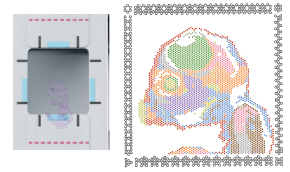
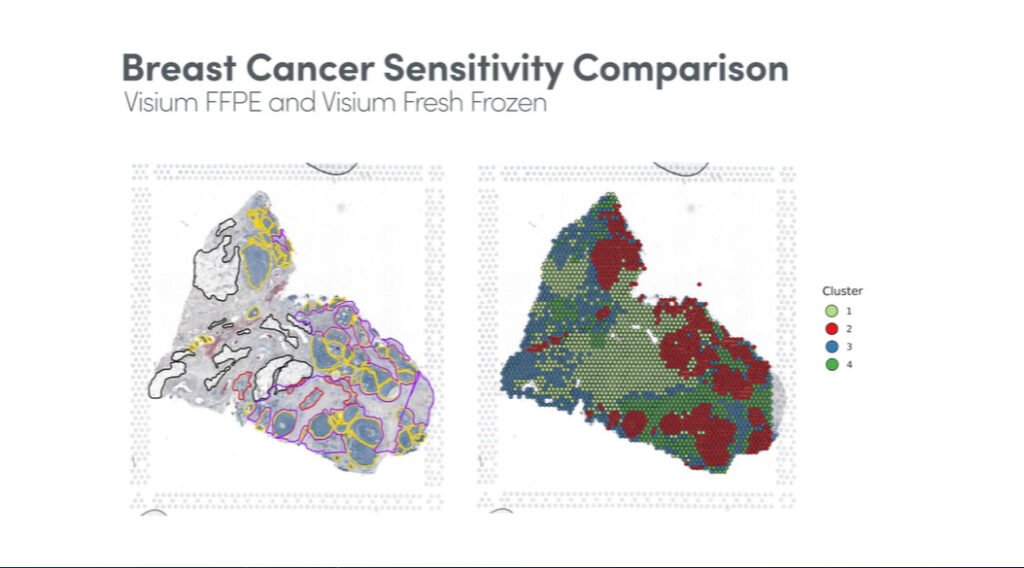
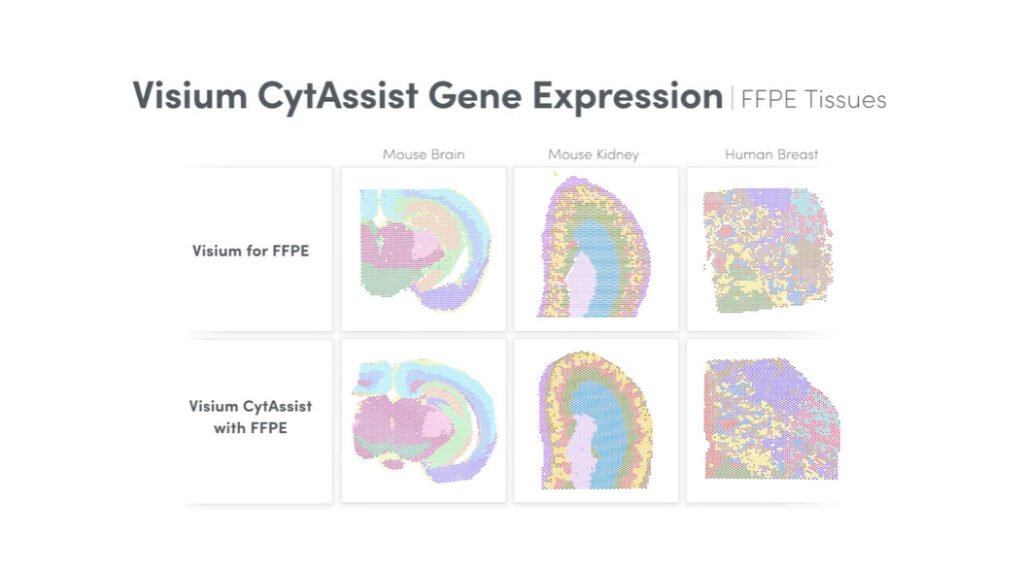
The Visium Spatial Gene Expression platform employs PolyA capture technology, making it versatile across species and free from bias. SeqMatic also offers the Visium CytAssist platform, which uses specialized probes to sequence both fresh frozen tissue and FFPE samples from human and mouse specimens.
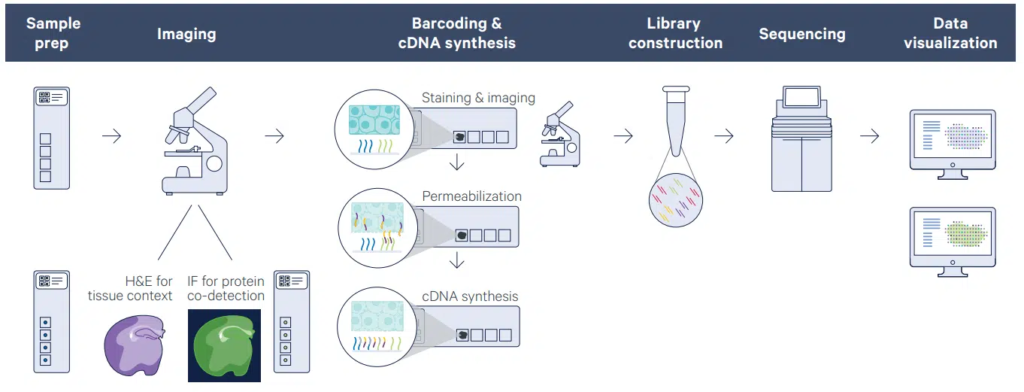
Diagram description: In a Visium direct placement workflow, a fresh frozen tissue section is placed onto a Visium gene expression slide and imaged for histological purposes (either H&E for morphological context, or IF for protein co-detection). Each Capture Area on a Visium slide has an array that captures mRNA. The spatial barcodes are added to the mRNA. The libraries are then sequenced and data visualized to determine which genes are expressed, and where, as well as in what quantity.
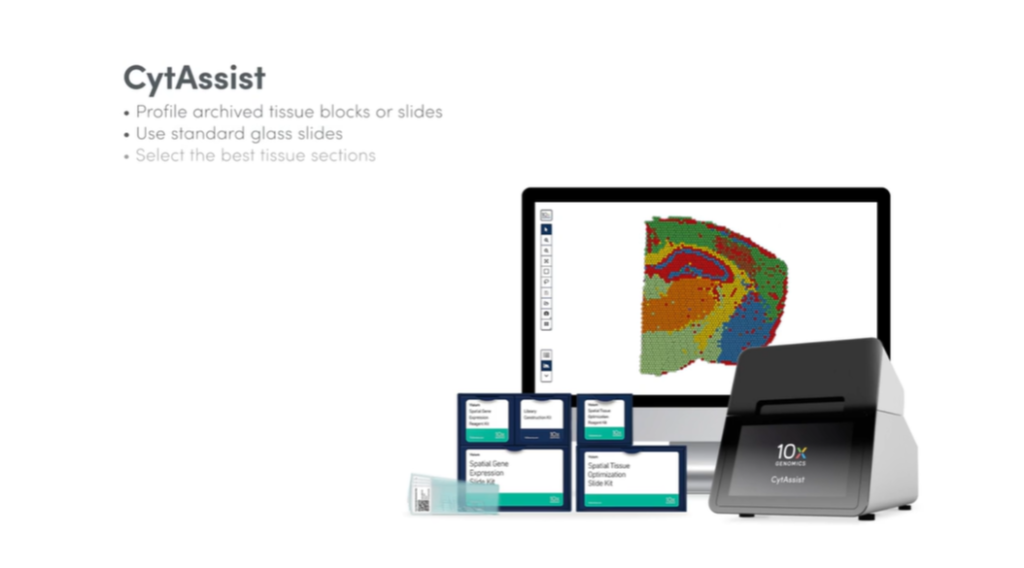
The spatial transcriptomics platform Visium CytAssist has a pre-set of probes (human or mouse) which allows the use of fresh frozen or FFPE tissue sections. The advantage of automation is that it uniformly distributes and transfers the probe set and provides consistency within the workflow. Custom probe sets can also be designed for use with the assay.
Learn more about SeqMatic’s CytAssist Services.
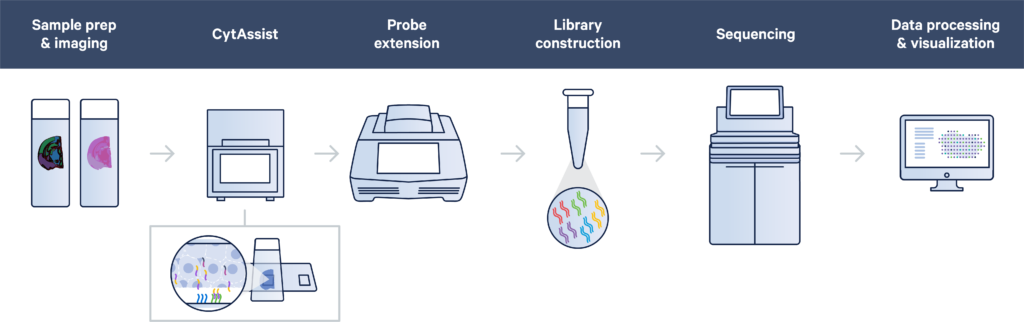
Diagram description: The Visium CytAssist workflow begins on a standard glass slide, where researchers perform sectioning, tissue preparation, and either H&E or IF staining, followed by imaging. Next, after probe hybridization, two standard glass slides and a Visium slide with two Capture Areas are placed in the CytAssist instrument so that the tissue sections on the standard slides can be aligned on top of the Capture Areas. Within the instrument, a brightfield image is captured to provide spatial orientation for data analysis, followed by hybridization of transcriptomic probes to the Visium slide. The remaining steps, starting with probe extension, follow the standard Visium workflow outside of the instrument.
SeqMatic expertly processes frozen and formalin-fixed paraffin-embedded (FFPE) tissues while also providing custom processing solutions for single stain chromogenic and immunofluorescent services. Through these services, the company helps customers optimize and validate antibodies, then generates detailed scans and comprehensive reports.
Learn more about our science-first approach!
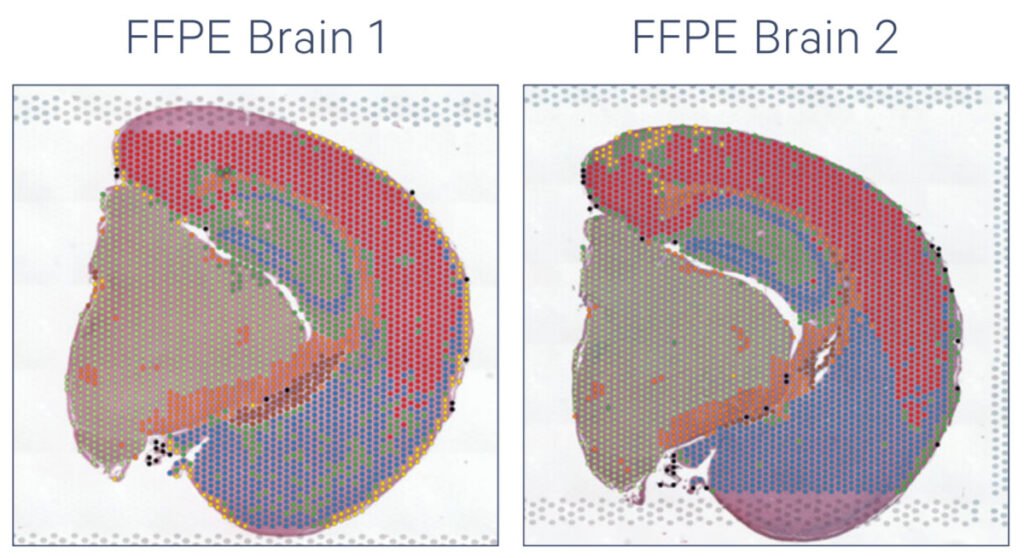
Serial sections taken from a mouse brain FFPE sample and processed with the Visium Spatial for FFPE assay demonstrate high reproducibility, both in clustering and total unique molecular identifiers (UMIs) detected



The SeqMatic approach starts with proven genomic workflows and proprietary controls that have been refined and optimized over the past decade to deliver considerably more data than Illumina specifications.
The SeqMatic approach starts with proven genomic workflows and proprietary controls that have been refined and optimized over the past decade to deliver considerably more data than Illumina specifications.
View More
We learn about the goals of our customer’s scientific research and the type of sequencing data that would be most beneficial to their project.
We learn about the goals of our customer’s scientific research and the type of sequencing data that would be most beneficial to their project.
View More
Then we modify our workflow to target those specific reads. Couple that effort with world class turnaround time.
Then we modify our workflow to target those specific reads. Couple that effort with world class turnaround time.
View More
This application of best science, higher quality data, more read depth per lane, and fast delivery makes SeqMatic an exceptional partner and value per research dollar spent.
This application of best science, higher quality data, more read depth per lane, and fast delivery makes SeqMatic an exceptional partner and value per research dollar spent.
View MoreOptimal solutions are custom-made according to research needs